
AC Repair in Phoenix
Air conditioners and heat pumps that blow warm air, run weak, ice up, leak or won’t start at all.
Phoenix summers push past 110 degrees for weeks at a time, and an air conditioner here runs almost nonstop for most of the year. That workload wears out capacitors, contactors, motors and refrigerant joints faster than a milder climate would, so a part that’s getting weak tends to give out on the hottest afternoon, when the system is working its hardest.
If yours has quit completely and the house is heating up, what to do right now comes first.
AC Problems We Repair
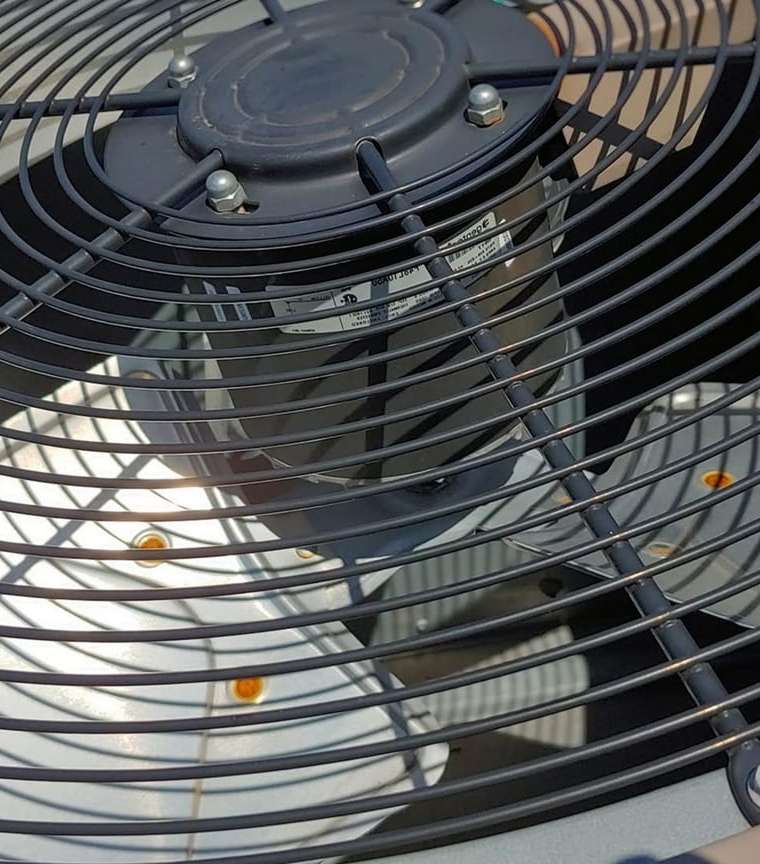
Call us when your air conditioner or heat pump shows any of these signs:
- Not cooling: the system runs, but the air from the vents is warm or only slightly cool.
- Weak airflow: air barely moves at the vents, or some rooms get almost none.
- Short cycling: it starts and stops every few minutes and never catches up.
- Strange noises: grinding, squealing, buzzing, rattling or a hard clunk at startup.
- Ice on the coil: frost or ice on the indoor coil or on the copper lines outside.
- Water leaks: water pooling by the indoor unit, or a stain spreading on the ceiling under it.
- Thermostat faults: a blank screen, a wrong reading, or a system that ignores its settings.
Behind those signs sit the faults we repair: refrigerant leaks, failed capacitors, worn blower and fan motors, frozen evaporator coils and faulty thermostats, on central air conditioners and on heat pumps in either mode.
Symptoms, Causes and Checks
Each symptom has a short list of usual causes, and a technician works through them in order.
| Symptom | Common Causes | What a Technician Checks |
|---|---|---|
| Warm air from the vents | A refrigerant leak, a failed capacitor or contactor, a dirty outdoor coil | Refrigerant pressures, the outdoor unit’s electrical parts, both coils |
| Outdoor unit hums but won’t start | A failed capacitor, a stuck contactor, a seized motor | Capacitor, contactor and motor windings |
| Weak airflow | A clogged filter, a failing blower motor, leaking or crushed ducts | Filter, blower motor, duct connections at the unit |
| Short cycling | Low refrigerant, an overheating part, a thermostat fault, an oversized unit | Refrigerant charge, safety switches, thermostat, unit size |
| Grinding, squealing or buzzing | Worn motor bearings, a loose fan blade, a failing contactor | Motors, fan blades, mounts and electrical contacts |
| Ice on the coil or lines | Weak airflow, low refrigerant, a blower problem | Filter and airflow, refrigerant charge, evaporator coil |
| Water by the indoor unit | A drain line clogged with scale or algae, a cracked drain pan, a thawing coil | Drain line, drain pan, float safety switch |
| Thermostat blank or ignored | Dead batteries, loose wiring, a failed thermostat, no power to the controls | Batteries, wiring, control voltage, the thermostat |
| Heat pump stuck in one mode | A sticking reversing valve, a control or setup fault | Reversing valve, defrost and mode controls |
What should I notice about the problem before I call?
A few details narrow the search. Is the outdoor unit running, with its fan turning? Is the air from the vents warm, or cool but weak? Does the trouble show up all day or only on the hottest afternoons? Is there ice on the copper lines, water by the indoor unit or a new noise, and where is it coming from? Has a breaker tripped?
Look and listen, but leave the covers on: everything worth noting can be seen from outside the equipment.
When you’re ready, schedule a repair visit and include what you’ve noticed.
Repair or Replacement
A single failed part on a sound system is usually worth repairing. The question changes when the system is old, the repair is a big one or the breakdowns keep coming. The more of these that describe your air conditioner, the stronger the case for replacing it:
- It’s older than about 15 years.
- It has needed more than one major repair in the last couple of summers.
- The repair it needs now is a compressor or a coil, the biggest jobs an air conditioner can need.
- It runs on an older refrigerant that’s no longer made, and it has a leak.
- It can’t keep the house comfortable, even after repairs and a cleaning.
- Your summer power bills keep climbing while your habits stay the same.
- Some rooms never cool well, and the ductwork is old or leaking.
Before any work starts, we go over the options with you.
Should I repair or replace an air conditioner that’s about 15 years old?
It depends on the repair. A capacitor, contactor or fan motor is a modest fix that can keep an older unit going for a while. A failed compressor or a leaking coil on a unit that age usually tips the balance toward replacement, since the money would go into equipment near the end of its life either way.
Can a refrigerant leak be repaired?
Often, yes. A technician finds the leak with an electronic detector, bubble solution or dye, repairs the joint or replaces the leaking part, then pulls a vacuum and recharges the system. Topping up the refrigerant without fixing the leak only buys time, because the system will run low again.
A leak inside the evaporator coil usually means replacing the coil, and on an older system that’s the moment to weigh a full replacement.
Tracking Down the Cause
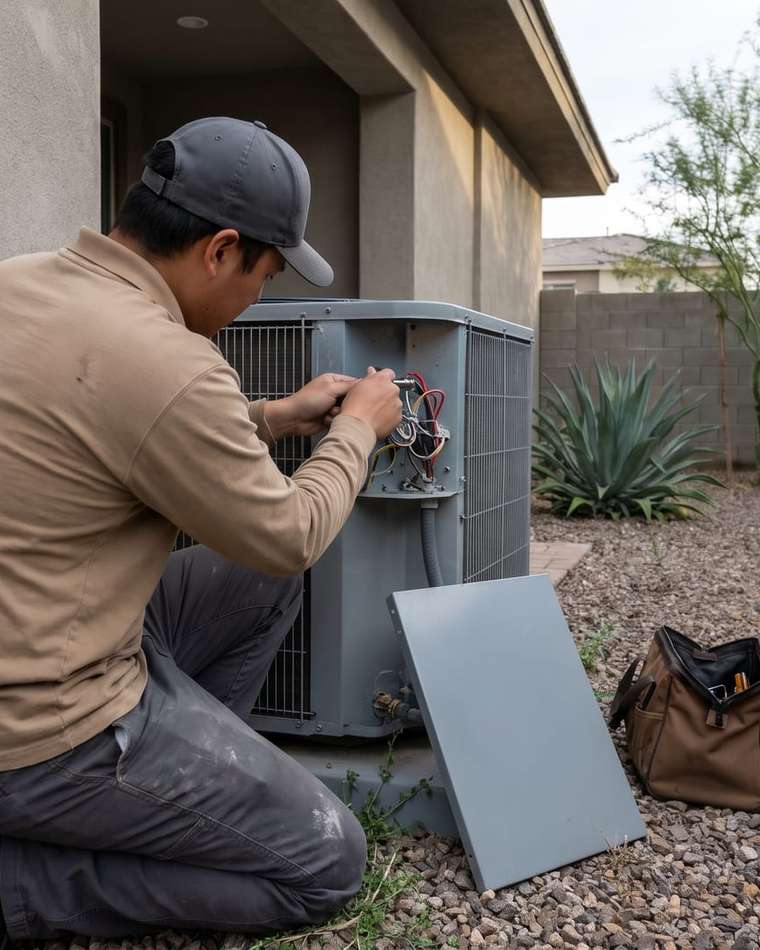
A repair is more than swapping the part that failed. A capacitor that burned out may have been overworked by a dirty coil or a dragging fan motor, and replacing it alone would only set up the next breakdown. So a technician typically checks the whole chain:
- the thermostat and its low-voltage control wiring
- the capacitor, contactor and wiring in the outdoor unit
- refrigerant pressures and temperatures, and any sign of a leak
- the condenser coil outside and the evaporator coil inside
- the blower motor and the outdoor fan motor
- the condensate drain line, the drain pan and its safety switch
- the filter and the airflow through the system
Air conditioner acting up? Call us, or schedule a repair visit.