
AC Emergency: What to Do First
When the air conditioner quits in the heat, keep everyone safe and cool, then work through a few quick checks.
Without cooling, a house in a Phoenix summer heats up within hours, and that heat is a bigger danger than the broken unit, especially for babies, older adults, anyone who is ill, and pets. Deal with safety first. Then check the simple things: a thermostat setting, a tripped breaker or a clogged filter can stop a system that isn’t broken at all.
Do This First
- Burning smell or sparks: switch the system off at the thermostat and leave it off until it has been checked.
- People and pets: keep everyone cool and drinking water. Close the blinds on sunny windows, run ceiling fans, gather in the coolest room and bring outdoor pets into the shade or indoors. If the house keeps heating up, go somewhere with working air conditioning.
- Electrical panels: don’t open them. Keep the covers on the outdoor unit, the indoor unit and the disconnect box closed, because a capacitor inside can hold a dangerous charge even with the power off. Resetting a breaker in your home’s breaker box is as far as it’s safe to go.
- Gas smell or smoke: if you smell gas, leave the house, do not switch anything on or off, and call the gas company or 911 from outside. If you see smoke, get everyone out and call 911.
Heat illness can come on quickly. Anyone who becomes confused, faint or very hot to the touch needs help right away: call 911.
Quick Checks for a Stopped AC
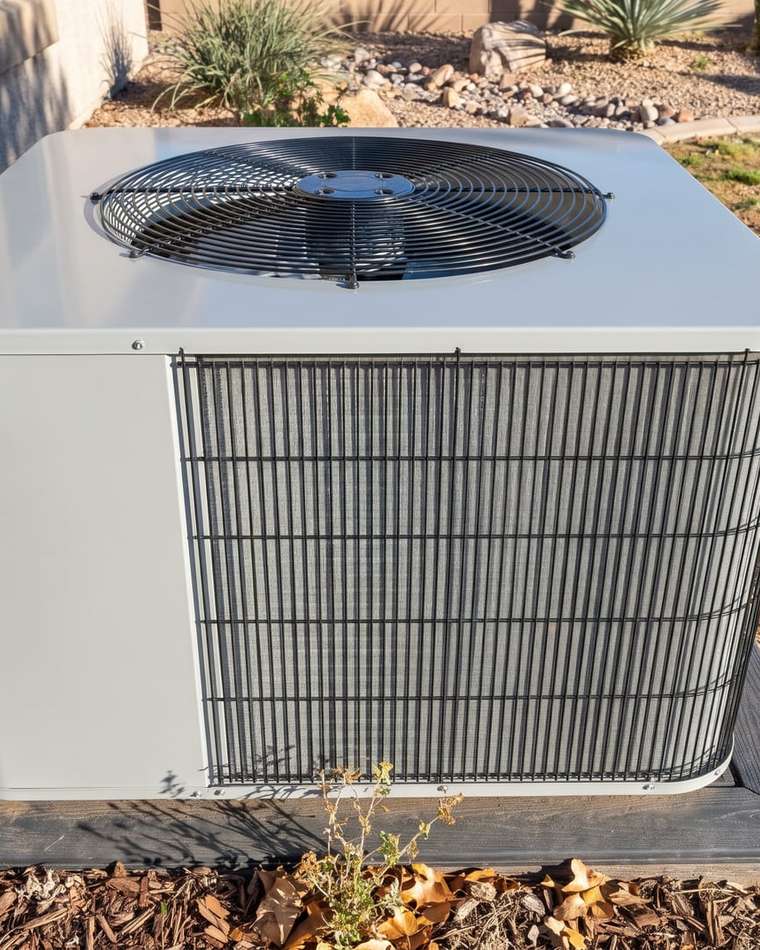
Not every stopped air conditioner is broken. The quick checks run from the thermostat on the wall to the breaker box, the air filter and the copper lines, and end at the outdoor unit, the box with the big fan on a pad outside.
None of them means opening the equipment or touching wiring. Even at the outdoor unit, you only need to look and listen from a step or two away: whether its fan turns and whether it hums says a lot about what’s wrong.
Each answer leads either to something you can try yourself or to the point where a technician should take over.
AC Troubleshooter
Answer Yes or No to each question. The check runs in your browser and saves nothing.
After one safety question, the check runs from the thermostat to the outdoor unit, one question at a time.
If the checks point to a repair, or you’d rather skip them, schedule service and mention anything you noticed, such as ice on the lines or a breaker that tripped.
Why an AC Stops Cooling in Summer Heat
On the hottest afternoons an air conditioner runs without a break, and the outdoor unit has to push the house’s heat out into air that’s already blazing hot. That’s when weak parts give out: a capacitor near the end of its life, a fan motor running hot, a coil caked with dust, or a system that was already low on refrigerant. Some failures are sudden. Others start as a system that runs nonstop and loses a little more ground each day.
Is it normal for the house to warm up in the late afternoon with the AC running?
Up to a point. On the hottest afternoons even a healthy system can fall a little behind, then catch up after sunset. What isn’t normal is warm air from the vents, a system that still can’t catch up overnight, or one that falls further behind each day. Those point to a problem worth a repair visit.
What should I avoid doing while the AC is out?
Don’t keep resetting a breaker that trips, and don’t run the cooling with ice on the lines: switch to fan only and let it thaw. Don’t chip at the ice, spray water into a running unit or take its panels off.
Don’t set the thermostat far below the room temperature to make up ground, since the system won’t cool any faster. And don’t try adding refrigerant yourself: federal rules require refrigerant to be handled by certified technicians, and a system that’s low has a leak that needs finding.
Why won’t the AC start again after a power outage?
Many systems wait a few minutes before the outdoor unit restarts, and some thermostats lose their settings, so check the mode and the set temperature first. A summer storm can also trip a breaker or damage a capacitor or control board with a surge. If the breakers are on, the thermostat is set right and the outdoor unit still won’t start, switch the cooling off and call us.
If the checks didn’t bring back the cool air, call us or schedule a repair.